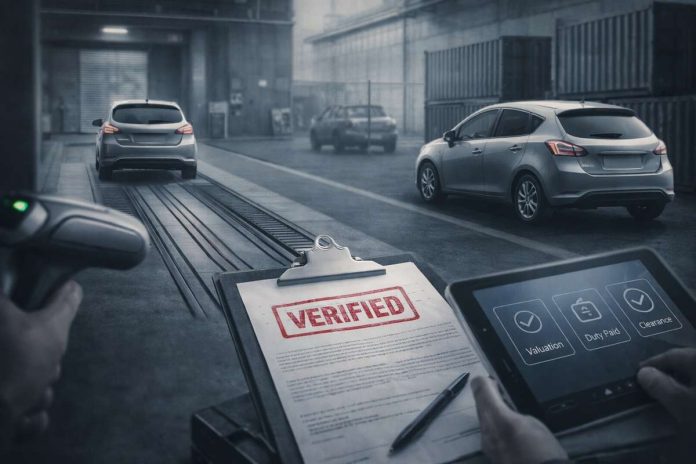
Pakistan’s small-car market has become the country’s most telling test of whether regulation rewards compliance or rewards avoidance. Demand has rebounded, financing has returned, and locally assembled models, especially in the below-1000cc segment, are again moving in volume. Yet the same period has also exposed two persistent vulnerabilities: the aggressive use of import schemes designed for personal facilitation, and an entrenched “non-custom paid” vehicle economy concentrated in border corridors. Both practices compress the space for lawful expansion, and both weaken the signals that foreign and domestic investors look for when they assess risk. The same black-economy logic that has long hurt tobacco, tea, pharmaceuticals, and consumer products is visible in automotive channels as well, and it requires constant state attention rather than periodic crackdowns.
Start with the legal core. Pakistan Automotive Manufacturers Association (PAMA) data reported in mainstream business coverage shows passenger car sales reaching 112,203 units in FY2024–25, up from 81,579 in FY2023–24. Within that recovery, small cars dominate the story. Suzuki Alto alone sold 46,466 units in FY2024–25, according to the same PAMA-based reporting, meaning roughly two out of every five locally reported sales were Alto. In June 2025, the “below 1,000cc” category recorded 10,178 sales out of 17,659 total passenger car sales, again reflecting how strongly demand concentrates at the entry end of the market.
That demand profile matters because it explains the tension around imports. Pakistan’s market is finite. Every car that enters through a parallel channel reduces the headroom for local assemblers and, more importantly, the parts vendor ecosystem that depends on predictable volumes. Industry representatives quoted in national reporting have argued that used-car inflows translate directly into lost vendor demand, because each locally assembled car contains substantial local content and supports employment across allied industries.
The legal import channel has historically operated through personal schemes, including personal baggage, gifts, and transfer of residence. In July 2025 alone, Pakistan Customs reportedly cleared over 4,400 used vehicles under these schemes, figures that triggered a new wave of concern about how “personal” imports can become de facto commercial flows. The same reporting described over 600 high-value vehicles worth nearly Rs 50 billion in that single month’s clearances.
This is where the malpractice question becomes unavoidable. Multiple media accounts, citing import-data analysis and industry concerns, describe patterns consistent with systematic under-invoicing and scheme abuse. One report stated that vehicles were declared at values ranging from 10,000 to 250,000 Japanese yen and gave an example of a 2020 Toyota Land Cruiser declared at Rs 19,000, far below market value, suggesting severe under-invoicing risk. The same reporting also claimed that some importers using “personal” channels had no travel history to Japan and that shipping documentation resembled commercial transactions, which is precisely the type of red flag that post-clearance audit systems are designed to detect.
The scale of used-car inflows is also large enough to shape market share. The Express Tribune reported that Pakistan imports an average of 34,000 used vehicles annually and that in FY2024–25, around 40,000 used cars were imported, capturing “close to a quarter” of the total passenger car market. The same story cited industry estimates of Rs 60 billion in lost revenue for local parts manufacturers that year and suggested job losses and investment hesitation within the vendor base. A separate policy-oriented report in The News, discussing the same import wave, stated that 45,758 vehicles were imported between December 2024 and October 2025, with nearly 99% coming from Japan. It also cited industry estimates of roughly Rs 50 billion in losses over that period. It argued that used-car importers draw more foreign exchange per car than local manufacturers, including an estimate that much of the higher draw occurs through informal channels.
The government’s response has not been to ignore imports, but to reshape them. A 2025 policy roadmap reported by Dawn described a plan to liberalize commercial used-vehicle imports, initially allowing vehicles up to 5 years old and later removing age limits, while applying a 40% regulatory duty that would be phased down over time. The Economic Coordination Committee’s decision to allow the commercial import of used vehicles, with the same 40% regulatory duty and the same safety and environmental compliance conditions, was also widely reported. This policy shift is relevant to malpractice because commercial import frameworks can be audited and monitored more transparently than personal schemes, provided enforcement follows through on valuation, documentation, and post-clearance verification.
The truly black channel, however, is not the legally used import stream. It is the “non-custom paid” (NCP) vehicle economy, in which vehicles enter and circulate without duties or documentation. The evidence is not speculative; it is visible in official enforcement releases. In late 2025, Customs Enforcement Quetta reported repeated seizures of NCP vehicles across Balochistan. One operation described seizing 28 NCP vehicles worth Rs 272 million, including models such as Aqua, Vitz, Mira, and Alto, which are directly relevant to the small-car segment. Another enforcement release reported the seizure of 11 NCP vehicles worth Rs 81 million from a godown on the Main RCD Highway in Mastung, again pointing to warehousing and onward distribution rather than incidental border crossings. A further operation at Rakhni reported seizure of nine NCP vehicles plus smuggled goods, conducted with support from the Frontier Corps and police, reinforcing the point that this is an organized trade requiring joint enforcement.
Balochistan’s own enforcement leadership has described the scale in blunt terms. At a May 2025 joint press conference reported in the Daily Times, it was stated that 179 seized NCP vehicles were handed over to Customs and that the auction proceeds were expected to contribute over Rs 500 million to the national treasury. The same report quoted the Balochistan police chief as saying that more than 900 NCP vehicles had been handed over in earlier operations. Even if these numbers do not quantify the entire NCP market, they establish persistence and volume.
The geography of this trade is also long established. An earlier investigation by The News described Balochistan as a major market for NCP vehicles brought via Afghanistan and the Chaman border, and listed Quetta areas where such sales were said to occur, including Joint Road, Satellite Town, Double Road, and Saryab Road, among others. While that reporting is older, the repeated 2025 enforcement actions in the same province suggest that the underlying incentives have not disappeared.
For investors, this matters for the same reason illegal trade in tobacco, tea, pharmaceuticals, and consumer products matters: it changes the economics of compliance. A market cannot attract serious capital into assembly, vendor localization, and after-sales networks if large segments can compete without paying duties or taxes or meeting standards. Even domestic investors read the message and adjust, delaying capacity upgrades, limiting new models, and cutting supplier development. Foreign investors do the same, especially when they have alternative markets.
Pakistan is still attracting automotive-linked foreign investment, including in newer segments. Reuters reported that BYD plans to assemble vehicles in Pakistan from 2026 with an initial annual capacity of 25,000 units, starting with assembly of imported parts and some local component production. That kind of investment depends on predictable rules, credible enforcement, and a market where documented channels are protected from black competition.
The policy case is therefore not anti-import. It is pro-documentation. Pakistan needs a single, enforceable framework where commercial imports are transparent, valuations are credible, personal schemes are not abused as commercial loopholes, and NCP vehicle networks are continuously disrupted through coordinated Customs, police, and provincial excise action. The government’s fight against the wider black economy, including illegal trade in tobacco, tea, pharmaceuticals, and consumer products, has already shown that continuity is the only deterrent. The small-car market is another front of the same contest: rule-based commerce versus price advantages built on evasion.