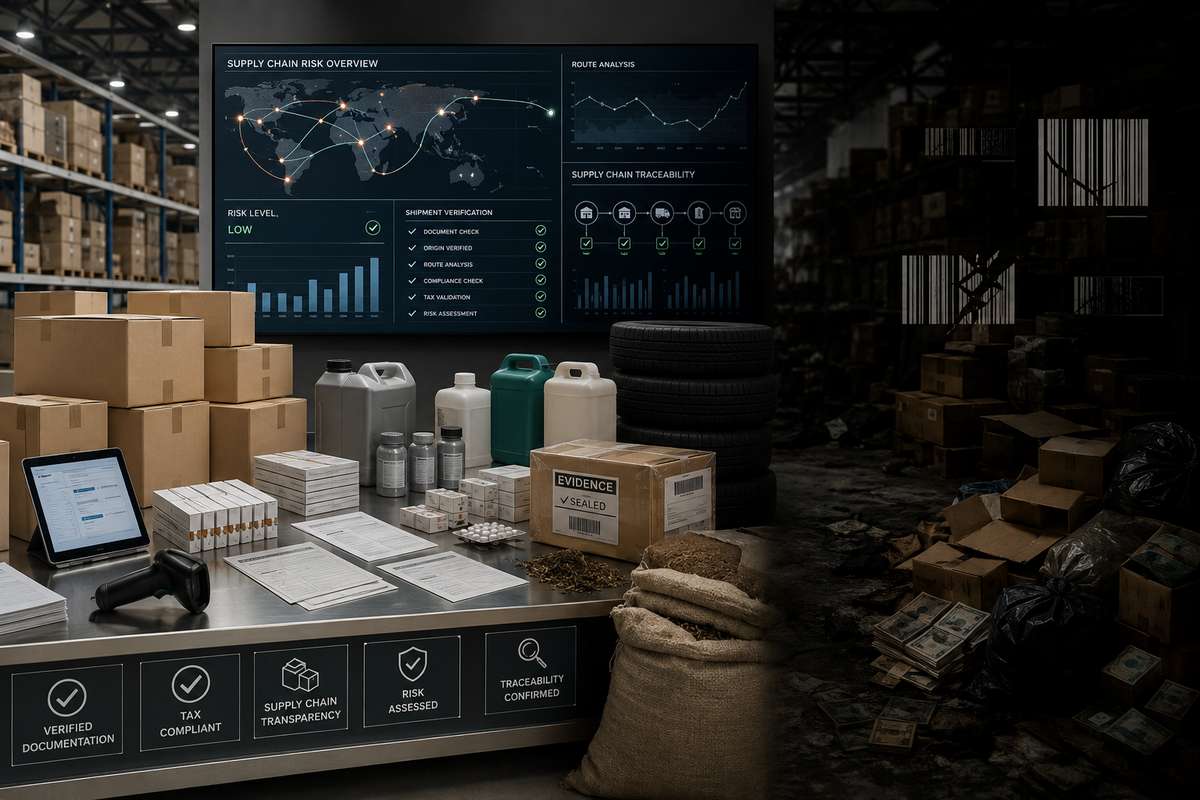
Pakistan’s fight against illegal trade should not be treated as a temporary campaign, a revenue stunt, or a seasonal administrative drive. It should become a permanent economic policy of the state. For more than a decade, Pakistan has tried to raise revenue by taxing the same documented businesses repeatedly. At the same time, large parts of the economy have continued to operate outside the law. This has created a deeply unfair market: the legal business pays taxes, follows rules, incurs documentation costs, and faces audits; the illegal business avoids duties, sells at lower prices, captures market share, and uses weak enforcement as a business advantage.
The numbers now leave little room for polite denial. A 2025 PRIME and TRACIT report describes illegal trade as a critical challenge for Pakistan’s economy, with an estimated informal economy of about $123 billion and annual tax revenue loss of Rs. 3.4 trillion. The same report ranks Pakistan 101st out of 158 countries in the 2025 Illicit Trade Index, below both the global and regional averages. This is not simply a border problem. It is a governance problem that runs through taxation, customs, retail markets, supply chains, transport, warehousing, documentation, and law enforcement.
The Pakistan Business Council’s 2023 work, cited in later policy discussions, estimated the overall illegal economy at around $68 billion annually, close to one-fifth of the formal economy, with tax losses large enough to affect the country’s development spending, debt management, and fiscal credibility. Different reports use different methods, but they point in the same direction: Pakistan is losing far more through illegal trade than it can recover through ordinary increases in tax rates on compliant businesses.
The clearest policy lesson is simple. Pakistan cannot fix its revenue problem only by raising tax rates. It must reduce the illegal economy that sits outside those rates. A higher tax rate on a legal product often does not produce higher revenue if an untaxed substitute is easily available. It can push consumers, wholesalers, and retailers toward the cheaper illegal option. That is why enforcement must come before fresh taxation in sectors where illegal supply already has deep roots.
The five sectors most often identified in recent reports show the scale of the problem. Real estate remains one of the largest sources of tax losses, with an IPSOS study reported in 2023 estimating an untapped potential of up to Rs. 500 billion. The issue is not only low taxation; it is under-declaration, weak valuation, cash transactions, and poor documentation. The sector absorbs large volumes of undocumented funds and gives them the appearance of ordinary wealth. Reforming real estate taxation therefore requires credible valuation, digital records, beneficial ownership disclosure, and integration with anti-money laundering systems.
Tobacco is another high-loss sector. Recent estimates place tax evasion from illegal cigarettes at more than Rs. 300 billion annually. PRIME and TRACIT estimate that illegal cigarettes account for 56 percent of the market after the sharp increase in Federal Excise Duty in 2023. Earlier IPSOS reporting placed illegal cigarettes at 48 percent of the market, including locally manufactured tax-evaded cigarettes and smuggled brands. These numbers differ, but the trend is consistent. When legal cigarettes become expensive and illegal cigarettes remain openly available, the state does not necessarily gain revenue. It may lose legal sales, weaken compliant firms, and hand the price gap to illegal manufacturers and smugglers.
Petroleum products are another major source of leakage. PRIME and TRACIT estimate annual revenue loss from smuggled petrol and diesel at Rs. 270 billion, with about 2.8 billion liters reportedly smuggled from Iran. This sector damages more than tax collection. Illegal fuel distorts competition among licensed dealers, undermines product quality, undermines regulated supply chains, and creates enforcement risks along long, porous routes. The policy response must combine border controls, depot-level checks, transport monitoring, and action against retail outlets selling illegal fuel.
Tires and auto lubricants also show how illegal trade becomes normalized in daily commerce. Recent reporting and sector assessments estimate losses at around Rs. 106 billion, with more than 60 percent of tires sold in Pakistan described as smuggled in the PRIME and TRACIT sector table. The legal importer or manufacturer pays customs duties, sales tax, compliance, warehousing, and documentation costs. The illegal operator bypasses much of that burden and then competes on price. No serious industrial policy can survive such an uneven market.
Pharmaceuticals are perhaps the most dangerous case because the loss is not only fiscal. Estimates place the annual financial impact of counterfeit, smuggled, or substandard medicines at Rs. 60-65 billion. But the real cost includes patient safety, treatment failure, public distrust, and reputational harm to the documented health industry. This sector needs stricter coordination among customs, DRAP, provincial health authorities, police, and market inspectors. A fake or smuggled medicine is not a tax issue alone. It is a public safety threat.
Tea may not be among the largest sectors by loss in every estimate, but it shows the wider consumer pattern. Reports in 2024 estimated illegal tea trade losses at around Rs. 10 billion annually, while earlier IPSOS reporting put tax evasion in tea far higher. The difference itself shows why Pakistan needs a more transparent official measurement system. The government should not have to rely on scattered studies, industry estimates, and media reporting to understand major revenue leaks. It should build its own continuously updated illegal trade dashboard.
The strategy should begin with measurement. Pakistan needs a national observatory on illegal trade under the federal government, with FBR, Pakistan Customs, Inland Revenue, provincial revenue authorities, DRAP, OGRA, police, FIA, and the Bureau of Statistics feeding data into a single platform. This platform should track seizures, prosecutions, market surveys, retail prices, import declarations, tax stamps, product registrations, transit cargo, warehouse movement, and repeat offenders. Without measurement, enforcement remains reactive.
Second, Pakistan should move enforcement from the borders to the whole supply chain. Border seizures are necessary, but they are not enough. Illegal goods do not vanish at the border; they travel through transporters, warehouses, wholesale markets, retailers, and cash networks. Enforcement must therefore target the entire chain. A truck carrying smuggled fuel, a warehouse storing illegal cigarettes, a shop selling non-duty-paid goods, and a financier moving cash should all face consequences. The current risk for many illegal operators remains too low.
Third, the government should strengthen retail-level enforcement. Illegal trade persists because products reach consumers openly. If a non-tax-paid cigarette pack, smuggled tire, illegal fuel, fake medicine, or undocumented tea packet can be sold in plain sight, the state’s writ is already weakened. Retail inspections should become routine, technology-enabled, and visible. Inspectors should have tools to verify tax stamps, product registration, import status, and batch records. Penalties should rise for repeat retailers and wholesalers.
Fourth, tax policy must stop creating incentives for evasion. This does not mean mindlessly lowering taxes. It means designing taxes with enforcement reality in mind. Sudden and steep increases in highly evaded sectors can widen the price gap between legal and illegal goods. PRIME and TRACIT specifically warn against unplanned tax increases and recommend that tax changes be aligned with inflation and enforcement capacity. Pakistan should use tax policy to increase revenue, not inadvertently expand the illegal market.
Fifth, the government must improve prosecution. Seizures make news; convictions change behavior. Illegal trade networks often absorb confiscation as a business cost if prosecutions are slow, penalties are weak, and influential operators expect relief. Special revenue courts, fast-track procedures for repeat offenders, asset confiscation, and public reporting of case outcomes can strengthen deterrence. The state should publish not only what it seizes, but also who is prosecuted, what penalties are imposed, and whether the same networks return under new names.
Sixth, Pakistan must attack the money trail. Illegal trade is not only the movement of goods; it is the movement of money. Cash dealing, hawala and hundi channels, under-invoicing, over-invoicing, benami ownership, and real estate parking all help illegal profits survive. Reuters reported in 2023 that a crackdown on the currency black market pushed money back toward formal channels, showing that administrative action can work when it is coordinated and visible. The same discipline should apply to profits from illegal trade. FBR, FIA, FMU, SBP, and provincial authorities must connect commodity enforcement with financial intelligence.
Seventh, technology should be used seriously, not ceremonially. Track-and-trace systems, customs risk engines, digital invoicing, point-of-sale integration, e-way bills, QR verification, satellite route monitoring, and artificial intelligence for valuation anomalies can all help. But technology fails when it is not enforced. A tax stamp that nobody checks at the retail level is a decoration. A digital invoice that does not connect to stock movement is a file. Technology must be tied to inspections, penalties, audits, and prosecutions.
Eighth, federal and provincial coordination must improve. Illegal trade moves across jurisdictions, while enforcement often remains trapped inside them. The federal government should create joint enforcement cells for high-risk sectors. These cells should include federal and provincial officials and should work with clear targets, shared intelligence, and monthly public reporting. Provincial administrations should be judged not only by law-and-order indicators but also by their performance against illegal markets.
The government should also protect enforcement officers from political and administrative pressure. Illegal trade persists where enforcement staff know that action against powerful operators will result in transfer, suspension, harassment, or isolation. Officers who act lawfully against illegal networks should receive institutional support, legal protection, and recognition. Investors watch this closely. A country that cannot protect its own enforcement system cannot convincingly promise protection to lawful businesses.
Pakistan’s illegal trade problem has grown over the years, so it will not disappear in weeks. But the direction of policy can change immediately. The government should continue enforcement, expand it, measure it, and make it permanent. The reward will not be only a higher tax collection. It will mean fairer markets, stronger legal businesses, safer consumers, better investor confidence, and a state that takes its own laws more seriously. Pakistan does not need another slogan against illegal trade. It needs a system that makes illegal trade less profitable every single day.


