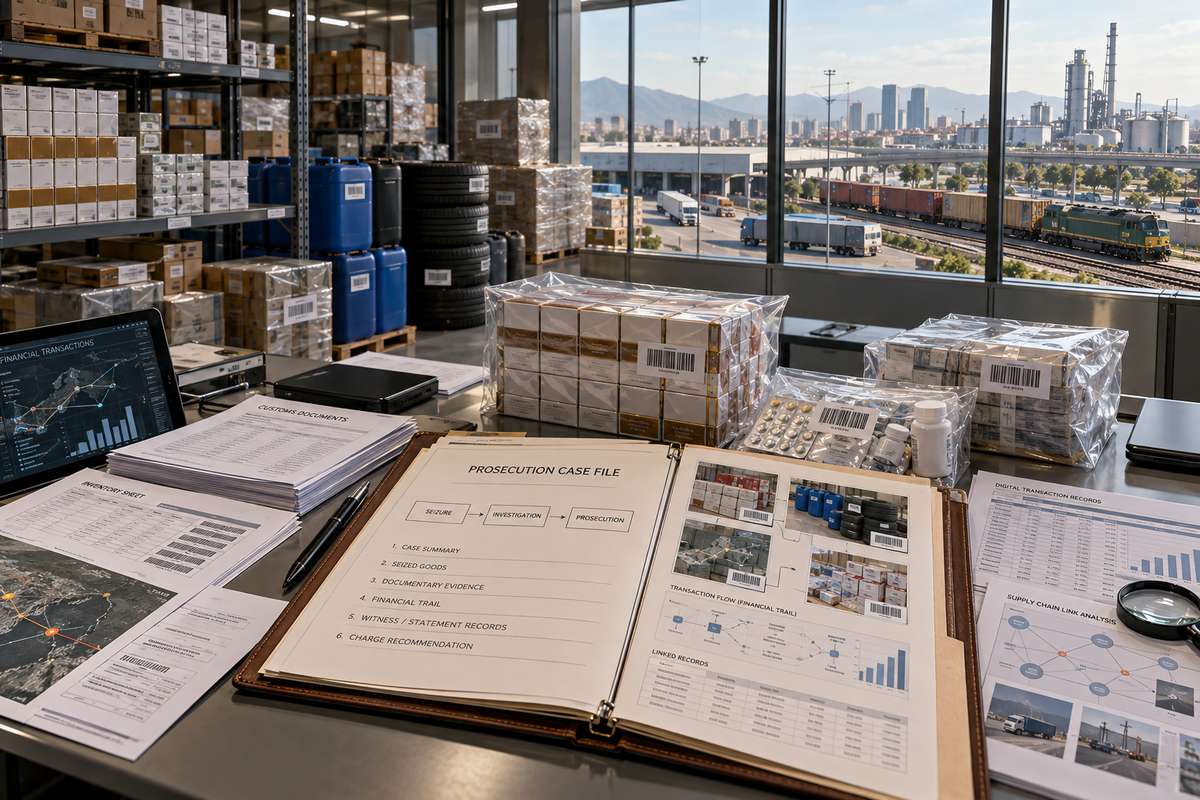
Pakistan’s law enforcement agencies have repeatedly demonstrated that they can identify illegal businesses, seize untaxed goods, shut down unauthorized factories, and intercept smuggled consignments. Yet a fundamental question remains largely unanswered: how many of these enforcement operations result in successful prosecutions, meaningful penalties, recovery of stolen taxes, and the permanent disruption of criminal business networks?
This question deserves serious attention because Pakistan cannot afford an enforcement system that delivers impressive seizures but fails to establish lasting deterrence. A factory may be sealed, a warehouse emptied, or a consignment confiscated. But if those responsible can resume operations, reorganize their distribution networks, or treat confiscation as another business expense, the state has achieved only temporary success.
The real test of enforcement is not how much the government seizes. It is how effectively the government prevents the same crime from happening again.
An Expensive Economic Problem
The Pakistan Business Council’s 2023 report, A Framework to Control Illicit Trade, identified smuggling, under-invoicing, misdeclaration, counterfeiting, and other illegal commercial practices as major threats to Pakistan’s documented economy. Its recommendations included stronger political commitment, better coordination among government institutions, improved use of technology, and effective prosecution throughout the chain of tax evasion.
The 2025 study jointly published by the PRIME Institute and the Transnational Alliance to Combat Illicit Trade (TRACIT) reinforced these concerns. It examined illegal economic activity across major sectors and called for better enforcement, institutional coordination, and measures that make illegal business less attractive.
These findings point to a fundamental imbalance in Pakistan’s marketplace.
A documented business pays taxes, follows product standards, maintains commercial records, and bears the financial cost of compliance. An illegal competitor can avoid many of these obligations and offer cheaper products, not because it is more efficient, but because it operates outside the law.
When this situation continues, legal businesses lose customers, government revenue declines, and potential investors face uncertainty about the fairness of the market.
For a country struggling to increase exports, industrial production, employment, and domestic investment, this is a serious economic disadvantage.
Enforcement Has Improved, but the Next Stage Matters More
Recent Federal Board of Revenue operations demonstrate that the government has the institutional capacity to confront illegal trade.
In November 2025, FBR reported sealing an illegal cigarette manufacturing facility while estimating annual revenue losses from unlawful cigarette production and trade at approximately Rs. 250 billion to Rs. 300 billion.
In December 2025, the Regional Tax Office Abbottabad announced the seizure of an operational illegal cigarette manufacturing setup, including high-capacity machinery, packing equipment, manufacturing inputs, and non-duty-paid products. FBR stated that legal proceedings had been initiated under the Federal Excise Act, 2005.
Such actions deserve appreciation. They demonstrate political and administrative commitment to protecting public revenue.
However, an announcement that legal proceedings have begun is not the same as a final conviction. Nor does the sealing of a factory automatically establish that its owners, financiers, distributors, and other responsible participants have been investigated and held accountable.
The distinction is critical.
A seizure removes goods from circulation. A properly investigated case can expose the entire commercial network behind those goods. A successful prosecution can impose penalties, recover financial benefits, and increase the risks facing repeat offenders.
Pakistan needs all three outcomes.
Why Illegal Business Networks Can Survive Raids
Illegal trade usually involves more than the individual caught transporting or selling unlawful goods.
A cigarette factory requires machinery, raw materials, financing, transport, distribution, and retail access. Smuggled petroleum products require supply arrangements, transport routes, storage, and buyers. Counterfeit medicines require production or sourcing, packaging, wholesalers, and outlets.
Consequently, arresting a driver or confiscating a consignment may leave much of the underlying business untouched.
The Pakistan Business Council has specifically recommended action against the extended chain of illegal trade, including stronger provincial cooperation, improved transaction transparency, and effective prosecution and punishment.
This approach should become standard government policy.
Investigators should establish who financed the illegal goods, who controlled their movement, who operated the warehouses, who collected payments, and who ultimately received the proceeds.
Without these answers, enforcement risks becoming an expensive cycle of interception and replacement.
The Missing Link Between Enforcement and Investment
Pakistan frequently emphasizes its desire to attract foreign direct investment. Yet investment confidence depends on far more than tax concessions, investment conferences, or promises of administrative facilitation.
Investors need confidence that their businesses will operate in a marketplace where rules apply fairly.
A legitimate manufacturer considering an investment in Pakistan will assess whether the government can protect the market from smuggled substitutes, counterfeit products, illegal manufacturing, and systematic tax evasion.
If illegal businesses can repeatedly regain market access after enforcement operations, legitimate investors may reasonably question the effectiveness of regulatory institutions.
The International Monetary Fund’s November 2025 governance diagnostic identified weaknesses in regulation, oversight, taxation, and institutional accountability as serious barriers to investment and revenue collection. Reuters reported that reforms addressing governance and corruption weaknesses could potentially increase Pakistan’s GDP by 5 to 6.5 percent over five years. This was a modeled opportunity, not a guaranteed outcome, but it demonstrated the economic importance of institutional reform.
The connection is straightforward: effective enforcement protects existing businesses, while credible prosecution helps convince future investors that illegal competitors will not enjoy permanent protection.
Pakistan Needs a Measurable Prosecution System
The government should now establish a national framework that follows major illegal-trade cases from detection to final legal outcome.
The framework should record the value of seized goods, estimated taxes involved, investigations completed, criminal charges filed, court proceedings, convictions, penalties imposed, assets confiscated, and taxes actually recovered.
Where proceedings fail, the government should document the reasons without compromising legitimate legal protections.
Such transparency would allow policymakers to distinguish effective enforcement from operations that produce headlines but little long-term impact.
A useful development is PRIME Institute’s 2026 follow-up framework for tracking anti-illegal-trade reforms introduced under the Finance Act 2025. Rather than relying on policy announcements, it proposes measurable indicators and implementation stages for assessing progress.
A similar performance framework should apply to prosecution.
FBR, Pakistan Customs, FIA, provincial police, prosecutors, and relevant regulatory authorities should also share information more effectively. Cases involving organized commercial networks require financial intelligence alongside evidence of goods movement.
At the same time, enforcement officers must receive institutional protection against unlawful political or administrative interference.
The system must remain fair. Allegations require evidence, accused persons retain legal rights, and penalties must follow due process. Strong enforcement gains credibility through lawful convictions, not arbitrary punishment.
Make Illegal Trade an Unprofitable Business
The government’s responsibility does not end when an illegal factory closes or a smuggled consignment is intercepted.
It ends successfully when responsible offenders face lawful consequences, authorities recover stolen revenue wherever possible, and illegal operations become difficult to restart.
This demands sustained enforcement, professional investigation, timely prosecution, transparent case reporting, and penalties proportionate to commercial wrongdoing.
Pakistan should therefore measure success by more than the number of raids conducted or cartons seized. More meaningful indicators include repeat offending, successful case outcomes, revenue recovery, and the ability of documented businesses to compete without illegal interference.
Prime Minister Shehbaz Sharif’s government and the Federal Board of Revenue can make this approach a permanent feature of economic governance.
Pakistan has spent decades trying to increase revenue from an economy in which substantial commercial activity remains undocumented or illegally conducted. The answer cannot be to place an ever-increasing burden on the same compliant businesses while illegal competitors retain an advantage.
Every effective prosecution strengthens the principle that compliance deserves protection and tax evasion carries consequences.
Enforcement demonstrates the state’s resolve. Investigation establishes responsibility. Prosecution turns that resolve into accountability.
Pakistan needs to complete that cycle. Otherwise, the illegal economy will continue to regard government raids as interruptions rather than consequences.
And a country seeking lasting economic growth cannot afford to let breaking the law remain a commercially attractive investment.


